
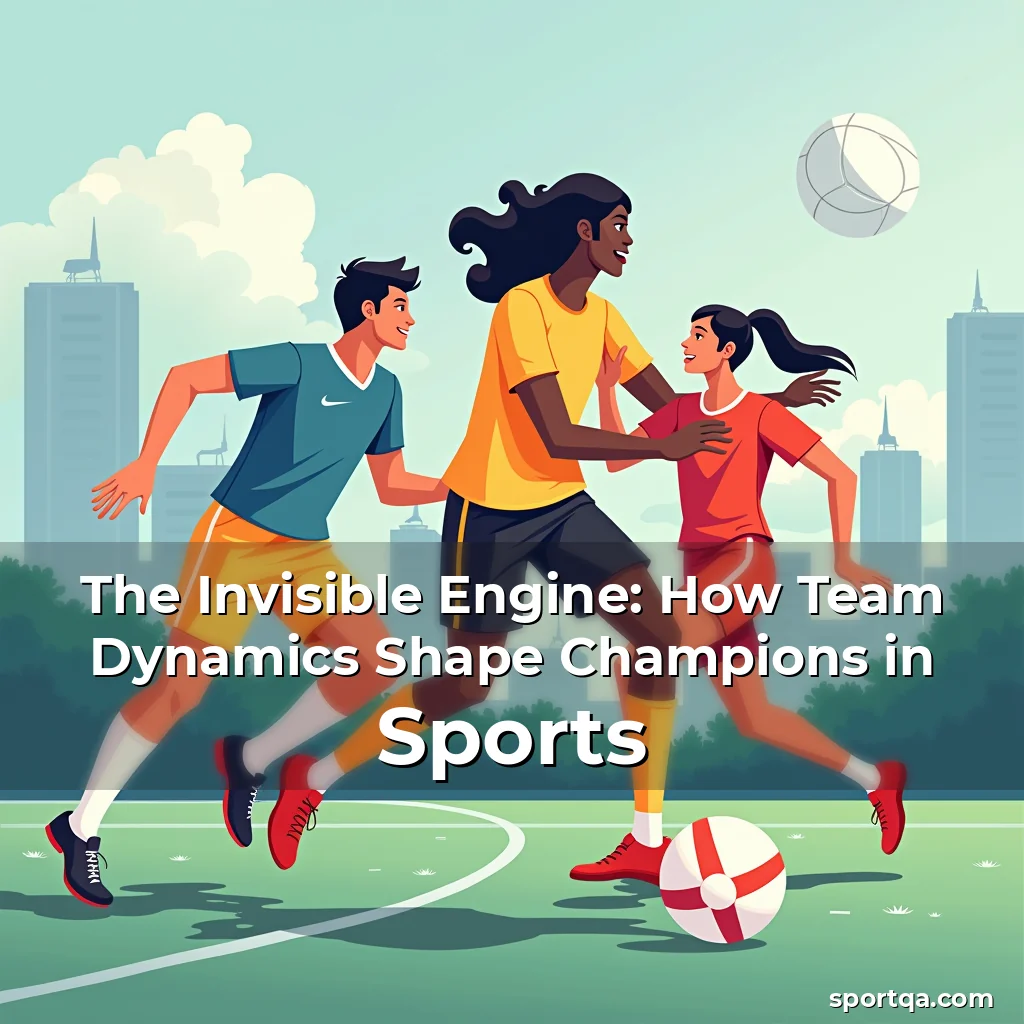
The Invisible Engine: How Team Dynamics Shape Champions in Sports
In the high-octane world of professional sports, where milliseconds determine victory or defeat, there’s an often-overlooked factor that separates champions from contenders. Beyond physical training, tactical strategies, and individual talent lies the complex web of human interactions known as team dynamics. This invisible engine powers every successful squad across soccer fields, basketball courts, and Olympic arenas.
Team dynamics encompass everything from communication patterns to psychological safety, shaping how athletes perform under pressure and respond to setbacks. Understanding these interpersonal forces is crucial not only for coaches but also for players seeking to elevate their game through collective strength rather than personal brilliance alone.
The Science Behind Winning Teams
Sports psychologists have long studied what makes some teams consistently outperform others. Research shows that elite squads exhibit distinct characteristics in how members interact, support each other, and maintain cohesion during intense competition. These patterns create a synergy that transforms ordinary collections of athletes into unstoppable forces.
A groundbreaking study by the University of California found that teams with strong social bonds showed improved performance metrics even when faced with adverse conditions. Players reported feeling less fatigued after workouts, recovering faster from injuries, and maintaining higher levels of motivation throughout grueling seasons.
Three key elements define successful team dynamics:
- Trust-based communication: Athletes who feel safe expressing ideas without fear of judgment can quickly adapt to changing game situations. In rugby matches, this translates to instant adjustments during scrums and lineouts based on real-time feedback.
- Mutual respect: When players acknowledge each other’s strengths and weaknesses, they form strategic partnerships on the field. NBA teammates who understand each other’s playing styles execute plays with pinpoint accuracy.
- Shared goals: Cohesive units align around common objectives rather than individual ambitions. Soccer teams with unified purpose show remarkable resilience in comeback victories against stronger opponents.
Cultivating Psychological Safety
Psychological safety forms the foundation of effective teamwork in sports environments. It refers to the comfort level athletes experience when sharing thoughts, concerns, or mistakes without fearing negative consequences. Establishing this environment requires intentional efforts from both coaching staff and veteran players.
Coaches play a pivotal role by creating spaces where constructive criticism is welcomed instead of met with defensiveness. In Major League Baseball spring training camps, managers implement daily reflection sessions allowing players to discuss challenges openly before facing actual games.
The Impact of Leadership Styles
Different leadership approaches significantly influence team morale and effectiveness. Transformational leaders inspire through vision and empowerment while transactional leaders focus on structured rewards and punishments. A Harvard Business Review analysis revealed that teams led by transformational coaches experienced a 28% increase in peak performance moments compared to those with traditional management styles.
This difference manifests visibly in locker rooms and practice facilities. Coaches who prioritize mentorship over authority see greater player engagement, with athletes voluntarily staying late for extra drills and supporting younger teammates through personalized guidance.
Communication Patterns That Define Greatness
Effective communication is the lifeblood of any championship-caliber team. From verbal cues on the court to nonverbal signals on the field, athletes must develop seamless ways to convey information rapidly and accurately. Miscommunication has been responsible for countless critical errors in high-stakes competitions.
Football quarterbacks exemplify master communicators, using hand signals, eye contact, and vocal commands to coordinate complex offensive plays. Their ability to read defensive formations and adjust strategies mid-game relies heavily on pre-established communication protocols developed through rigorous practice.
Five essential components of team communication include:
- Voice modulation: Varying tone and volume helps distinguish different types of instructions, especially in noisy environments like stadium crowds.
- Bodily gestures: Subtle movements such as pointing directions or making hand signs become second nature to seasoned teammates.
- Verbal shorthand: Developing internal jargon allows quick exchanges without wasting precious seconds.
- Non-verbal awareness: Reading body language tells when a teammate might need help or is anticipating a particular move.
- Feedback loops: Implementing systems for immediate correction ensures mistakes don’t repeat themselves in future scenarios.
Building Resilience Through Adversity
Championship teams aren’t defined solely by their successes but also by how they handle failures. Strong team dynamics enable groups to bounce back from losses, injuries, and external pressures more effectively than isolated individuals. The way athletes process setbacks together determines whether they become better or broken.
Tennis doubles partners provide excellent examples of this principle. After losing close matches, top pairs engage in structured debriefings focusing on objective analysis rather than emotional reactions. They identify areas for improvement collectively rather than placing blame on specific players.
Four stages of adversity response within teams are:
- Shock: Initial denial or disbelief following unexpected events like tournament eliminations.
- Grieving: Processing the loss emotionally while acknowledging its impact on team morale.
- Rebuilding: Implementing new strategies and reinforcing team unity through shared experiences.
- Renewal: Emerging stronger with enhanced understanding and deeper trust among members.
Navigating Personality Clashes
No two people are identical, yet in competitive sports settings, personality differences can either strengthen or weaken team cohesion. Recognizing and managing diverse temperaments becomes vital for maintaining harmony within squads. Successful teams find creative solutions that leverage individual strengths while minimizing conflicts.
Hockey teams offer fascinating case studies in this area. Goalies often have contrasting personalities compared to forwards, requiring specialized communication methods to ensure optimal coordination. Some goalies thrive on constant interaction, while others prefer minimal distraction during gameplay.
Common personality archetypes in sports teams include:
- The visionary leader: Provides direction and inspiration but may occasionally overlook practical considerations.
- The analytical thinker: Focuses on data-driven decisions but risks appearing overly cautious.
- The natural motivator: Energizes teammates through enthusiasm but needs balance with objectivity.
- The quiet achiever: Delivers consistent results discreetly but may struggle with visibility in team processes.
Fostering Accountability and Ownership
Strong accountability structures empower team members to take responsibility for their roles while reinforcing mutual support. When athletes recognize their contributions matter to collective success, they’re motivated to exceed expectations individually and collectively. This sense of ownership drives innovation and excellence at all levels.
Baseball managers employ various techniques to cultivate accountability. One popular method involves assigning rotating captaincy duties where different players lead practices or make strategic calls during games. This approach distributes leadership responsibilities and encourages broader participation.
Effective accountability frameworks feature:
- Clear expectations: Defining precise responsibilities for each position reduces ambiguity and confusion.
- Regular check-ins: Scheduled meetings allow tracking progress and addressing issues proactively.
- Peer reviews: Encouraging teammates to give honest assessments promotes continuous growth and development.
- Consequences & rewards: Implementing balanced systems that reinforce positive behaviors while addressing shortcomings constructively.
Leveraging Technology for Better Collaboration
Modern technology offers innovative tools to enhance team collaboration beyond traditional methods. Video analysis software, wearable fitness trackers, and virtual meeting platforms transform how athletes communicate and prepare together. These advancements enable more precise evaluations and targeted improvements.
Football clubs use sophisticated analytics to monitor player interactions during training sessions. By analyzing movement patterns and decision-making tendencies, coaches gain insights into group chemistry that would otherwise remain hidden. This data informs tailored interventions to strengthen weak links in team dynamics.
Notable technological applications include:
- Virtual reality simulations: Allow remote team bonding exercises and scenario-specific preparation.
- Real-time performance monitoring: Tracks physiological responses to stressors helping identify potential burnout risks early.
- Collaborative digital whiteboards: Enable asynchronous brainstorming sessions across time zones.
- AI-powered sentiment analysis: Detects subtle changes in team morale through speech patterns and written communications.
Creating Lasting Team Legacies
Exceptional team dynamics leave enduring marks on sporting history. Legendary squads become synonymous with certain qualities – the camaraderie of the Dream Team, the intensity of Brazil’s 1970 World Cup side, or the unbreakable bond of New Zealand’s All Blacks. These legacies arise from sustained excellence built upon solid interpersonal foundations.
Establishing a lasting legacy requires more than transient success; it demands cultivating values that transcend generations. Cricket teams that maintain traditions of mutual respect and inclusive culture continue producing champion sides decades later despite roster changes.
Factors contributing to legendary status include:
- Consistent core principles: Maintaining fundamental beliefs about teamwork and conduct through personnel turnover.
- Intergenerational knowledge transfer: Veteran players mentoring newcomers to preserve institutional wisdom.
- Cultural continuity: Keeping rituals and traditions alive that reinforce team identity.
- Purposeful evolution: Updating practices while honoring foundational philosophies.
Measuring and Improving Team Chemistry
Evaluating team dynamics objectively presents unique challenges since many aspects involve intangible factors. However, researchers have developed valid methodologies to assess and enhance group cohesion systematically. Measurable indicators combined with qualitative observations yield comprehensive insights.
One widely used assessment tool is the Group Environment Questionnaire (GEQ), which evaluates dimensions like group cohesiveness, satisfaction, and leadership quality. Football academies apply modified versions of this questionnaire to track developmental progress in youth teams.
Quantifiable metrics for assessing team health include:
- Retention rates: High player retention indicates satisfaction with team environment.
- Performance consistency: Stable rankings suggest strong underlying team stability.
- Conflict resolution efficiency: Shorter duration for resolving disputes reflects mature conflict-handling mechanisms.
- Training session engagement: Higher participation levels indicate positive psychological climates.
Conclusion
Understanding team dynamics reveals why some sports groups achieve extraordinary success while others falter despite similar resources and talent pools. At its heart, exceptional performance stems from harmonious relationships, clear communication channels, and shared aspirations that drive collective effort forward.
To build winning teams, focus on nurturing trust, fostering open dialogue, embracing diversity, and continuously refining collaborative processes. Remember that true greatness emerges not from individual stars shining brightly alone, but from entire constellations working in perfect synchrony toward common goals.

news is a contributor at SportQA. We are committed to providing well-researched, accurate, and valuable content to our readers.
You May Also Like


Share This Article
Previous Article
← Advanced Sports Health And Wellness Techniques and Methods